"So Many Books...So Little Time"
Some of the Library's newly-acquired books that have been highlighted on Colonie's Cable Channel 17 show called "So Many Books..So Little Time."
Thursday, December 8, 2011
And So It Goes: Kurt Vonnegut: A Life
A "New York Times" Notable Book for 2011
The first authoritative biography of Kurt Vonnegut Jr., a writer who changed the conversation of American literature.
In 2006, Charles Shields reached out to Kurt Vonnegut in a letter, asking for his endorsement for a planned biography. The first response was no ("A most respectful demurring by me for the excellent writer Charles J. Shields, who offered to be my biographer"). Unwilling to take no for an answer, propelled by a passion for his subject, and already deep into his research, Shields wrote again and this time, to his delight, the answer came back: "O.K." For the next year--a year that ended up being Vonnegut's last--Shields had access to Vonnegut and his letters.
"And So It Goes" is the culmination of five years of research and writing--the first-ever biography of the life of Kurt Vonnegut. Vonnegut resonates with readers of all generations from the baby boomers who grew up with him to high-school and college students who are discovering his work for the first time. Vonnegut's concise collection of personal essays, "Man Without a Country," published in 2006, spent fifteen weeks on the "New York Times" bestseller list and has sold more than 300,000 copies to date. The twenty-first century has seen interest in and scholarship about Vonnegut's works grow even stronger, and this is the first book to examine in full the life of one of the most influential iconoclasts of his time. (Check Catalog)
Knitting daily TV. / Series 100, episodes 1-13
Knitting Daily TV, a Public Television series, brings you the best of knitting, crochet, stitching, felting, spinning, and other fiber crafts. Hosted by Eunny Jang, Kim Werker, Liz Gipson, and Shay Pendray, Knitting Daily TV welcomes guests to share their fiber expertise, and one-of-a-kind designs using the latest yarns, techniques, and more. (Check Catalog)
Tyrants History's 100 Most Evil Despots & Dictators
Tyrants: History's 100 Most Evil Despots & Dictators is a study in depravity. It delves into the darkest recesses of the minds of the most vile men and women ever to seize power. With provocative insights into their shameful deeds, committed under a threadbare cloak of spurious legality, Tyrants confronts history's monsters head on. From the gruesome tale of the real-life Dracula, Vlad Tepes, a man who ate his meals surrounded by his impaled victims, to the gory deeds of latter-day cannibal, Idi Amin, Tyrants is a compelling portrait that recounts the strange and grisly stories behind the world's most infamous autocrats. (Check Catalog)
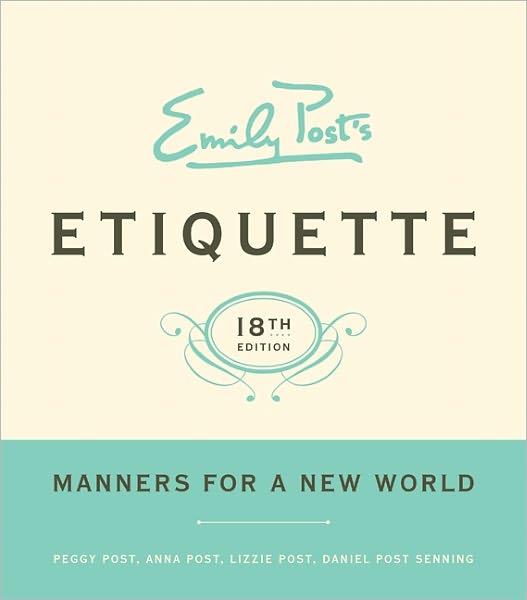
Emily Post's Etiquette : manners for a new world
Millions of Readers, Eighteen Editions, One Trusted Resource
From social networking to social graces, the name Emily Post has been the definitive source on etiquette for generations of Americans. That tradition continues with the 18th edition of "Etiquette," which welcomes a new generation of Posts--Anna Post, Lizzie Post, and Daniel Post Senning--the great-great grandchildren of Emily Post. Led by Peggy Post, author of the 16th and 17th editions of "Etiquette," this team shows how twenty-first-century manners are a combination of kindness, confidence, and awareness.
New trends, topics, and societal hot zones include: When is it okay to "unfriend" someone on Facebook? If I'm in a middle seat on an airplane, do I automatically get both armrests? A business client is sick with a cold--am I obligated to shake his hand? Is it rude for guests to tweet from a wedding? Do I have to buy a gift if I attend a destination wedding? Can I email a condolence note? Should I cover up my tattoo for a job interview?
The Posts don't stint on classic conundrums, either. "Emily Post's Etiquette" includes advice on names and titles, dress codes, invitations, table manners, workplace frustrations, and weddings.
According to the Posts, though times have changed, the principles of good manners remain constant. Above all, manners are a sensitive awareness of the feelings of others. Being considerate, respectful, and honest is more important than knowing which fork to use. Whether it's a handshake or a fist bump, it's the underlying sincerity and good intentions of the action that matter most. (Check Catalog)
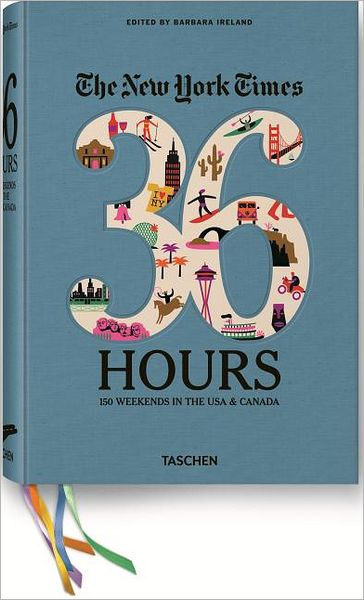
The New York Times 36 Hours: 150 Weekends in the USA & Canada
The ultimate travel guide to the USA and Canada
To travel in North America is to face a delicious quandary: over these vast spaces, with so many riches from glittering cities to eccentric small towns and heart-stoppingly beautiful mountains and plains, how to experience as much as possible in limited time? One answer is the quick hit, a jam-packed adventure that delivers a full sense of a single place's opportunities and personalities over a well-plotted two-night stay.
"The ""New York Times" has been offering up dream weekends with practical itineraries in its popular weekly "36 Hours" column since 2002. The many expert contributors, experienced travelers, and accomplished writers all have brought careful research, insider's knowledge, and a sense of fun to hundreds of cities and destinations, always with an eye to getting the most out of a short trip. Want to read what Sam Sifton suggests in his beloved borough of Brooklyn, or David Carr advises in Minneapolis, Mark Bittman in Death Valley, or Ariel Kaminer in Lower Manhattan? Here is where to do it, with full-color photographs to entice you and handy maps to guide you.
In this book, the "Times" and TASCHEN bring together updated and new versions of "36 Hours" columns in 150 U.S. and Canadian locations, from the great urban centers on everyone's travel list to surprising locales with undiscovered character and charm. The paths lead to fashionable clubs in Manhattan, blues joints in the Mississippi Delta, architectural treasures tucked in the Pennsylvania hills, the French America of Quebec, the seaside cliffs and Hollywood cool of California, and well beyond. For a taste of adventure and a veritable journey throughout the continent, explore 36 Hours in America.
* 150 North American destinations, from metropolitan hot spots to unexpected hideaways
* Practical recommendations for over 600 restaurants and 450 hotels
* Color-coded tabs and ribbons bookmark your favorite cities in each region
* Nearly 1,000 photos, most of them from "The New York Times" archive
* Small enough to throw in your suitcase, big enough to enjoy from your favorite reading chair
* All stories have been updated and adapted for this volume by Barbara Ireland, a veteran "Times" travel editor
* New illustrations by Times illustrator Olimpia Zagnoli of Milan, Italy
* Easy-to-reference indexes
* Detailed city-by-city maps pinpoint every stop on your itinerary (Check Catalog)
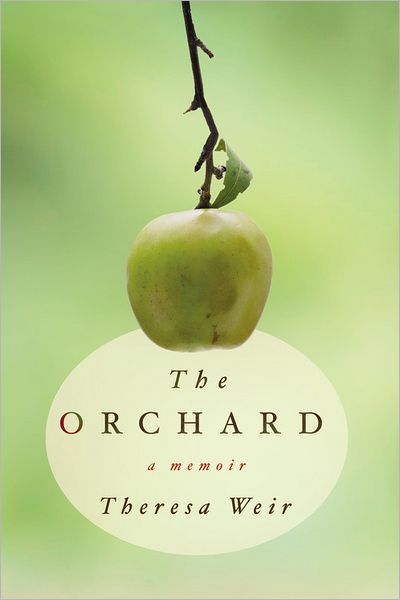
The Orchard
The use of heavy pesticides over decades on Midwestern farms forms the dark, moody leitmotiv of this affecting memoir set largely around a 1970s orchard by thriller writer Weir (aka Anne Frasier). As a 21-year-old from a divorced home who grew up in Miami and Albuquerque, with a talent for art but little prospects to educate herself, Weir gravitated toward the Midwest, where she worked as a waitress in her uncles bar in Henderson County, Ill., just off the Iowa border; farmers dropped in for beer and a secret stash of porn her uncle kept in the back, their arms dusted with the herbicide they used in the fields. Smitten with young, handsome Adrian Curtis, the scion of a large apple orchard that seemed to be under a curse of bad luck, Weir soon married the serious, reticent young farmer and lived with him in a small cabin on his parents farm, although she hadn't a clue about being a farm wife; moreover, her in-laws despised her as an outsider (white trash) and nobody expected her to last long. Nonetheless, the marriage endured happily, two healthy children were born, and Weir improbably managed to start a career as a writer. But then both Adrian and his father were diagnosed with and died from cancer. Afraid of further contaminating themselves, Weir and her two children eventually moved out of the county. Weir, now living in Minneapolis, narrates a truly disquieting tale of familial dislocation and rupture. (Check Catalog)
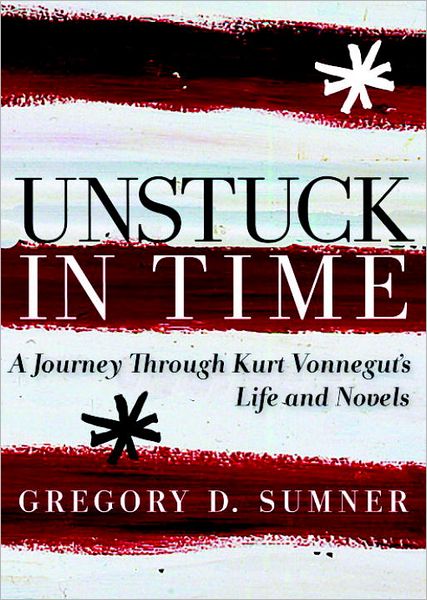
Unstuck in Time: A Journey Through Kurt Vonnegut's Life and Novels
In Unstuck in Time, Gregory Sumner guides us, with insight and passion, through a biography of fifteen of Kurt Vonnegut's best known works, his fourteen novels starting with Player Piano (1952) all the way to an epilogue on his last book, A Man Without a Country (2005), to illustrate the quintessential American writer's profound engagement with the "American Dream" in its various forms. Sumner gives us a poignant portrait of Vonnegut and his resistance to celebrating the traditional values associated with the American Dream: grandiose ambition, unbridled material success, rugged individualism, and "winners" over "losers." Instead of a celebration of these values, we read and share Vonnegut's outrage, his brokenhearted empathy for those who struggle under the ethos of survival-of-the-fittest in the frontier mentality--something he once memorably described as "an impossibly tough-minded experiment in loneliness." Heroic and tragic, Vonnegut's novels reflect the pain of his own life's experiences, relieved by small acts of kindness, friendship, and love that exemplify another way of living, another sort of human utopia, an alternative American Dream, and the reason we always return to his books. (Check Catalog)
Subscribe to:
Posts (Atom)