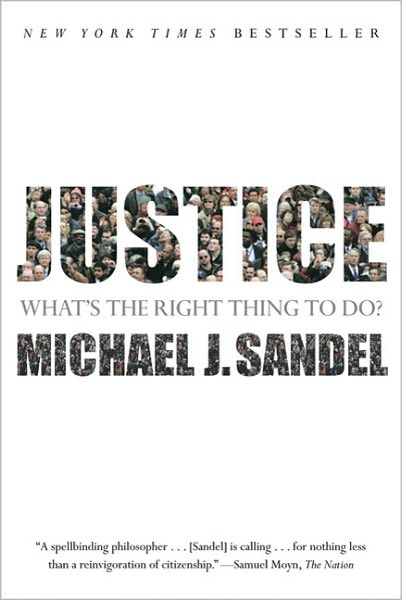
"For Michael Sandel, justice is not a spectator sport," "The Nation"'s reviewer of "Justice "remarked. In his acclaimed book--based on his legendary Harvard course--Sandel offers a rare education in thinking through the complicated issues and controversies we face in public life today. It has emerged as a most lucid and engaging guide for those who yearn for a more robust and thoughtful public discourse. "In terms we can all understand," wrote Jonathan Rauch in "The New York Times," "Justice ""confronts us with the concepts that lurk . . . beneath our conflicts."
Affirmative action, same-sex marriage, physician-assisted suicide, abortion, national service, the moral limits of markets--Sandel relates the big questions of political philosophy to the most vexing issues of the day, and shows how a surer grasp of philosophy can help us make sense of politics, morality, and our own convictions as well.
"Justice "is lively, thought-provoking, and wise--an essential new addition to the small shelf of books that speak convincingly to the hard questions of our civic life. (Check Catalog)
"So Many Books...So Little Time"
Some of the Library's newly-acquired books that have been highlighted on Colonie's Cable Channel 17 show called "So Many Books..So Little Time."
Wednesday, February 1, 2012
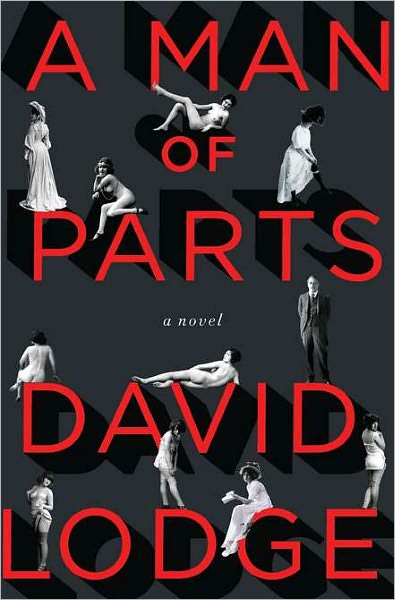
A Man of Parts
A riveting novel about the remarkable life-and many loves-of author H. G. Wells.
H. G. Wells, author of "The Time Machine" and "War of the Worlds," was one of the twentieth century's most prophetic and creative writers, a man who immersed himself in socialist politics and free love, whose meteoric rise to fame brought him into contact with the most important literary, intellectual, and political figures of his time, but who in later years felt increasingly ignored and disillusioned in his own utopian visions. Novelist and critic David Lodge has taken the compelling true story of Wells's life and transformed it into a witty and deeply moving narrative about a fascinating yet flawed man.
Wells had sexual relations with innumerable women in his lifetime, but in 1944, as he finds himself dying, he returns to the memories of a select group of wives and mistresses, including the brilliant young student Amber Reeves and the gifted writer Rebecca West. As he reviews his professional, political, and romantic successes and failures, it is through his memories of these women that he comes to understand himself. Eloquent, sexy, and tender, the novel is an artfully composed portrait of Wells's astonishing life, with vivid glimpses of its turbulent historical background, by one of England's most respected and popular writers. (Check Catalog)
H. G. Wells, author of "The Time Machine" and "War of the Worlds," was one of the twentieth century's most prophetic and creative writers, a man who immersed himself in socialist politics and free love, whose meteoric rise to fame brought him into contact with the most important literary, intellectual, and political figures of his time, but who in later years felt increasingly ignored and disillusioned in his own utopian visions. Novelist and critic David Lodge has taken the compelling true story of Wells's life and transformed it into a witty and deeply moving narrative about a fascinating yet flawed man.
Wells had sexual relations with innumerable women in his lifetime, but in 1944, as he finds himself dying, he returns to the memories of a select group of wives and mistresses, including the brilliant young student Amber Reeves and the gifted writer Rebecca West. As he reviews his professional, political, and romantic successes and failures, it is through his memories of these women that he comes to understand himself. Eloquent, sexy, and tender, the novel is an artfully composed portrait of Wells's astonishing life, with vivid glimpses of its turbulent historical background, by one of England's most respected and popular writers. (Check Catalog)
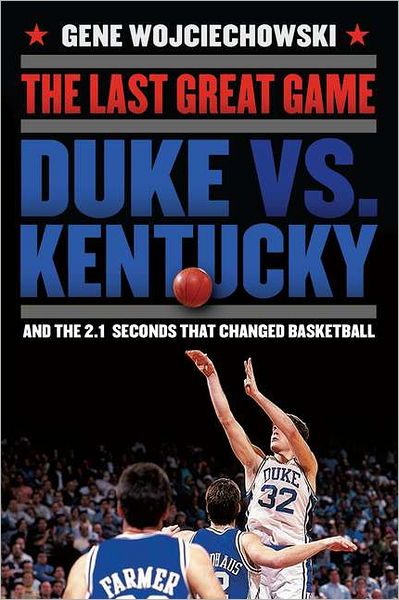
The Last Great Game: Duke vs. Kentucky and the 2.1 Seconds That Changed Basketball
The definitive book on the greatest game in the history of college basketball, and the dramatic road both teams took to get there.
March 28, 1992. The final of the NCAA East Regional, Duke vs. Kentucky. The 17,848 at the Spectrum in Philadelphia and the millions watching on TV could say they saw the greatest game and the greatest shot in the history of college basketball. But it wasn't just the final play of the game-an 80-foot inbounds bass from Grant Hill to Christian Laettner with 2.1 seconds left in overtime- that made Duke's 105-104 victory so memorable. The Kentucky and Duke players and coaches arrived at that point from very different places, each with a unique story to tell.
In "The Last Great Game," acclaimed ESPN columnist Gene Wojciechowski tells their stories in vivid detail, turning the game we think we remember into a drama filled with suspense, humor, revelations and reverberations. The cast alone is worth meeting again: Mike Krzyzewski, Rick Pitino, Bobby Hurley, Jamal Mashburn, Christian Laettner, Sean Woods, Grant Hill, and Bobby Knight. Timed for the game's 20th anniversary, "The Last Great Game" isn't a book just for Duke or Kentucky or even basketball fans. It's a book for any reader who can appreciate that great moments in sports are the result of hard work, careful preparation, group psychology, and a little luck. (Check Catalog)
March 28, 1992. The final of the NCAA East Regional, Duke vs. Kentucky. The 17,848 at the Spectrum in Philadelphia and the millions watching on TV could say they saw the greatest game and the greatest shot in the history of college basketball. But it wasn't just the final play of the game-an 80-foot inbounds bass from Grant Hill to Christian Laettner with 2.1 seconds left in overtime- that made Duke's 105-104 victory so memorable. The Kentucky and Duke players and coaches arrived at that point from very different places, each with a unique story to tell.
In "The Last Great Game," acclaimed ESPN columnist Gene Wojciechowski tells their stories in vivid detail, turning the game we think we remember into a drama filled with suspense, humor, revelations and reverberations. The cast alone is worth meeting again: Mike Krzyzewski, Rick Pitino, Bobby Hurley, Jamal Mashburn, Christian Laettner, Sean Woods, Grant Hill, and Bobby Knight. Timed for the game's 20th anniversary, "The Last Great Game" isn't a book just for Duke or Kentucky or even basketball fans. It's a book for any reader who can appreciate that great moments in sports are the result of hard work, careful preparation, group psychology, and a little luck. (Check Catalog)
Mrs. Nixon: A Novelist Imagines a Life
Dazzlingly original, Ann Beattie's "Mrs. Nixon "is a riveting exploration of an elusive American icon and of the fiction writer's art.Pat Nixon remains one of our most mysterious and intriguing public figures, the only modern First Lady who never wrote a memoir. Beattie, like many of her generation, dismissed Richard Nixon's wife: "interchangeable with a Martian," she said. Decades later, she wonders what it must have been like to be married to such a spectacularly ambitious and catastrophically self-destructive man.
Drawing on a wealth of sources from "Life "magazine to accounts by Nixon's daughter and his doctor to "The Haldeman Diaries "and Jonathan Schell's "The Time of Illusion, "Beattie reconstructs dozens of scenes in an attempt to see the world from Mrs. Nixon's point of view. Like Stephen King's "On Writing, "this fascinating and intimate account offers readers a rare glimpse into the imagination of a writer.
Beattie, whose fiction "Vanity Fair "calls "irony-laced reports from the front line of the baby boomers' war with themselves," packs insight and humor into her examination of the First Couple with whom boomers came of age. "Mrs. Nixon "is a startlingly compelling and revelatory work. (Check Catalog)
Drawing on a wealth of sources from "Life "magazine to accounts by Nixon's daughter and his doctor to "The Haldeman Diaries "and Jonathan Schell's "The Time of Illusion, "Beattie reconstructs dozens of scenes in an attempt to see the world from Mrs. Nixon's point of view. Like Stephen King's "On Writing, "this fascinating and intimate account offers readers a rare glimpse into the imagination of a writer.
Beattie, whose fiction "Vanity Fair "calls "irony-laced reports from the front line of the baby boomers' war with themselves," packs insight and humor into her examination of the First Couple with whom boomers came of age. "Mrs. Nixon "is a startlingly compelling and revelatory work. (Check Catalog)
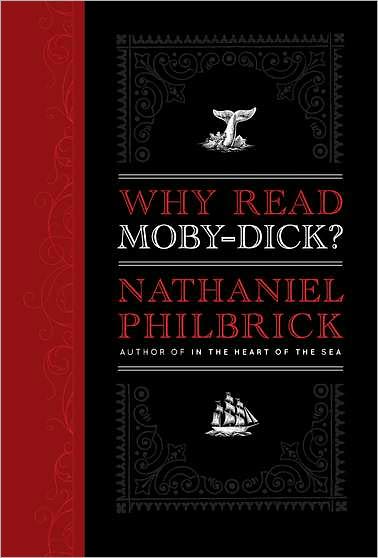
Why Read Moby-Dick?
"The New York Times" bestselling author of seagoing epics now celebrates an American classic.
"Moby-Dick" is perhaps the greatest of the Great American Novels, yet its length and esoteric subject matter create an aura of difficulty that too often keeps readers at bay. Fortunately, one unabashed fan wants passionately to give Melville's masterpiece the broad contemporary audience it deserves. In his National Book Award- winning bestseller, "In the Heart of the Sea, " Nathaniel Philbrick captivatingly unpacked the story of the wreck of the whaleship Essex, the real-life incident that inspired Melville to write "Moby- Dick." Now, he sets his sights on the fiction itself, offering a cabin master's tour of a spellbinding novel rich with adventure and history.
Philbrick skillfully navigates Melville's world and illuminates the book's humor and unforgettable characters-finding the thread that binds Ishmael and Ahab to our own time and, indeed, to all times. A perfect match between author and subject, "Why Read Moby-Dick?" gives us a renewed appreciation of both Melville and the proud seaman's town of Nantucket that Philbrick himself calls home. Like Alain de Botton's "How Proust Can Change Your Life, " this remarkable little book will start conversations, inspire arguments, and, best of all, bring a new wave of readers to a classic tale waiting to be discovered anew. (Check Catalog)
"Moby-Dick" is perhaps the greatest of the Great American Novels, yet its length and esoteric subject matter create an aura of difficulty that too often keeps readers at bay. Fortunately, one unabashed fan wants passionately to give Melville's masterpiece the broad contemporary audience it deserves. In his National Book Award- winning bestseller, "In the Heart of the Sea, " Nathaniel Philbrick captivatingly unpacked the story of the wreck of the whaleship Essex, the real-life incident that inspired Melville to write "Moby- Dick." Now, he sets his sights on the fiction itself, offering a cabin master's tour of a spellbinding novel rich with adventure and history.
Philbrick skillfully navigates Melville's world and illuminates the book's humor and unforgettable characters-finding the thread that binds Ishmael and Ahab to our own time and, indeed, to all times. A perfect match between author and subject, "Why Read Moby-Dick?" gives us a renewed appreciation of both Melville and the proud seaman's town of Nantucket that Philbrick himself calls home. Like Alain de Botton's "How Proust Can Change Your Life, " this remarkable little book will start conversations, inspire arguments, and, best of all, bring a new wave of readers to a classic tale waiting to be discovered anew. (Check Catalog)
Girl Hunter: Revolutionizing the Way We Eat, One Hunt at a Time
Many cookbook authors claim to provide start-to-finish instructions, but rare is the collection that prefaces each recipe with the story of the hunt that brought down its main ingredient. Here, before there is poached dove and pears in brandy sauce, there is a field of men in camouflage. Before there is sweet porchetta sausage, there is a bone-handled knife in a boars midsection. Pellegrini, despite what the cover photo implies, is not your everyday Western gal with a frying pan in one hand and a rifle in the other. Her Hudson Valley childhood, Wellesley education, brief career on Wall Street, and her cooking skills (honed at New Yorks French Culinary Institute), all inform her writing to create prose that falls somewhere between the culinary outdoorsiness of Jim Harrison and the urban insight of Candace Bushnell. Traveling through Louisiana, Texas, and Arkansas, hunting turkey, duck, and hog, she explores the thrill of the chase (I listen to the cartridge slip into the chamber, and walk sideways into the tall, cream grass) and reflects on its denouement (the casual way in which nature treats life and death). And she is equally keen in observing the series of male companions who serve as hosts and guides for her outings. These range from a friendly lawyer who escorts her through a Louisiana Bayou to a scary poacher with an uncomfortable perspective on steak in Wyomings cattle country. (Check Catalog)
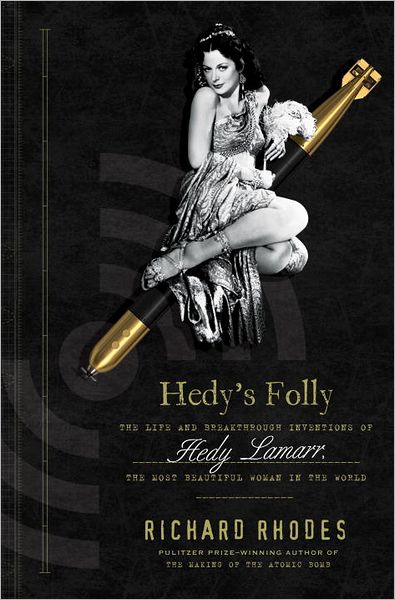
Hedy's Folly: The Life and Breakthrough Inventions of Hedy Lamarr, the Most Beautiful Woman in the World
The author of The Twilight of the Bomb (2010) returns with the surprising story of a pivotal invention produced during World War II by a pair of most unlikely inventors--an avant-garde composer and the world's most glamorous movie star. Pulitzer and NBA winner Rhodes offers the stories of his two principals in alternating segments, sometimes chapter-length. The diminutive pianist/composer George Antheil--who worked with Stravinsky, Ezra Pound, Balanchine, DeMille and other notables--was also a prolific writer and inventor. And Lamarr (born Hedwig Kiesler), smitten by the theater in her native Austria, married a wealthy man charmed by Nazis; she later fled for Hollywood, where she quickly established herself as a major star in such films as Algiers and Ziegfeld Girl. She crossed trails with Antheil, who'd also moved west. Rhodes shows us that Lamarr (a new surname name suggested by the wife of Louis B. Mayer) was extremely bright (though poorly educated), a woman who had an area in her house devoted to inventing. And Antheil--who'd once composed a piece requiring 16 synchronized player pianos--had inventing interests that dovetailed with Lamarr's. They worked together to invent a way to radio-guide torpedoes and to use a technique called frequency-hopping to insure that the enemy could not jam their signals. Lamarr and Antheil secured a patent, but the U.S. Navy did not adopt the device, which, as Rhodes shows, would form the foundations of today's Bluetooth, Wi-Fi and other wireless technologies. Antheil died before earning any recognition for this achievement, but Lamarr, late in her life, did receive awards. The author quotes liberally--perhaps overly so--from the memoirs of his principals. A faded blossom of a story, artfully restored to bright bloom. (Check Catalog)
Subscribe to:
Posts (Atom)