"So Many Books...So Little Time"

Some of the Library's newly-acquired books that have been highlighted on Colonie's Cable Channel 17 show called "So Many Books..So Little Time."

Thursday, December 13, 2012

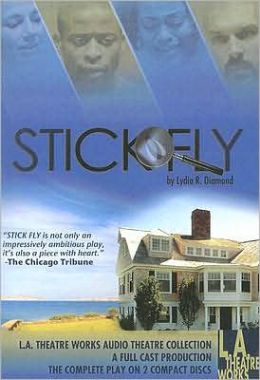
Stick Fly

by Lydia R. Diamond    (Find this book)
How well do you know your family? Your social class? Your race? Sensitive "Spoon" LeVay and his brother "Flip" see their weekend at the family home on Martha's Vineyard as a perfect opportunity to introduce their girlfriends to their upper class African American parents. Instead they stumble into a domestic powder keg that exposes secrets of prejudice, hypocrisy and adultery. This fantastic new play comes from the pen of one of the country's most provocative new playwrights!

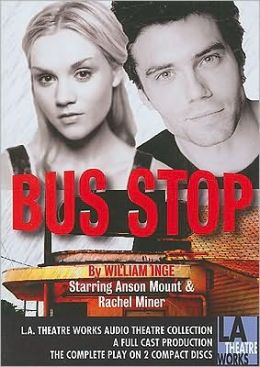
Bus Stop ( L.A. Theatre Works Audio Theatre Collections )

by William Inge    (Find this book)
Upon hitting Broadway in 1955 Bus Stop was an immediate commercial & critical success. During a winter storm a busload of weary travelers are forced to shack up at a roadside diner until morning. Inge was renowned for his in-depth character studies, Bus Stop is no exception and offers a warm play about the intersecting lives of eight ordinary people. A full-cast production featuring: Megan Anderson, Terrence Currier, Rachel Miner, Anson Mount, Kyle Prue, Lynnie Raybuck, Jefferson A. Russell, Gary Sloan.

Tuesday, December 11, 2012

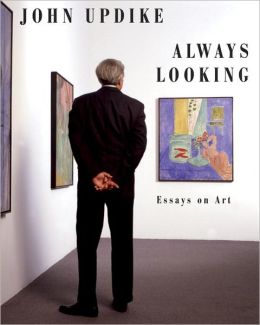
Always Looking: Essays on Art

by John Updike    (Find this book)
The previously uncollected art writings of the prolific and award-winning novelist and critic Updike, who died in 2009, are compiled in this handsome volume. The essays explore works by artists including Monet, Klimt, Degas, Miro, Magritte; the major movements of Impressionism, Surrealism, Pop art, and Minimalism; and the habits and tastes of the collectors who shape our understanding of fine art's place in American culture. The reviews, most of which appeared in the New York Review of Books and the New Republic, continue the analytical approach employed in the celebrated collections Just Looking (1989) and Still Looking (2005) by unspooling like narrations of a museum ramble with Updike at your side. Through Updike's lens of novelistic psychology, some of the best-known biographies of 19th and 20th century art history take on a wholly original cast. Our guide is eternally curious; informal but well-informed; adept at describing color, line, or brushstroke without falling back on jargon or metaphor. Whether he's transported by a Monet landscape or thrown off-balance by Richard Serra's torqued elliptical sculptures, Updike is always honest about how he is personally affected by the artwork. As the final document of Updike's sensitive and passionate approach to art, this book reinforces the late writer's great lesson: that we should always be looking. Illus. Agent: The Wylie Agency. (Nov.) Copyright 2012 Reed Business Information. -- Publishers Weekly

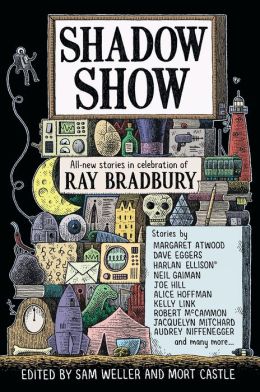
Shadow Show: All-New Stories in Celebration of Ray Bradbury

by Sam Weller    (Find this book)
"What do you imagine when you hear the name" . . . Bradbury?
You might see rockets to Mars. Or bizarre circuses where otherworldly acts whirl in the center ring. Perhaps you travel to a dystopian future, where books are set ablaze . . . or to an out-of-the-way sideshow, where animated illustrations crawl across human skin. Or maybe, suddenly, you're returned to a simpler time in small-town America, where summer perfumes the air and life is almost perfect . . . "almost."
Ray Bradbury--peerless storyteller, poet of the impossible, and one of America's most beloved authors--is a literary giant whose remarkable career has spanned seven decades. Now twenty-six of today's most diverse and celebrated authors offer new short works in honor of the master; stories of heart, intelligence, and dark wonder from a remarkable range of creative artists. -- Publisher Marketing

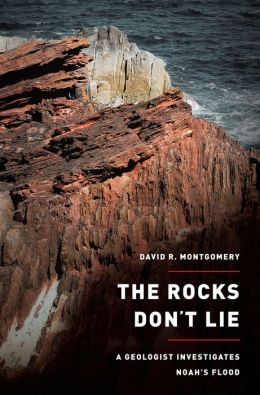
The Rocks Don't Lie: A Geologist Investigates Noah's Flood

by David R Montgomery    (Find this book)
In Tibet, geologist David R. Montgomery heard a local story about a great flood that bore a striking similarity to Noah's Flood. Intrigued, Montgomery began investigating the world's flood stories and--drawing from historic works by theologians, natural philosophers, and scientists--discovered the counterintuitive role Noah's Flood played in the development of both geology and creationism. Steno, the grandfather of geology, even invoked the Flood in laying geology's founding principles based on his observations of northern Italian landscapes. Centuries later, the founders of modern creationism based their irrational view of a global flood on a perceptive critique of geology. With an explorer's eye and a refreshing approach to both faith and science, Montgomery takes readers on a journey across landscapes and cultures. In the process we discover the illusive nature of truth, whether viewed through the lens of science or religion, and how it changed through history and continues changing, even today. -- Publisher Marketing

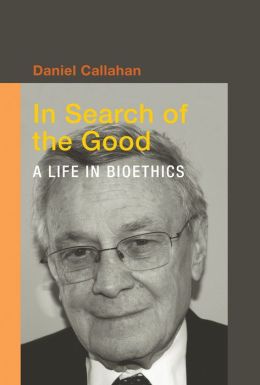
In Search of the Good: A Life in Bioethics

by Daniel Callahan    (Find this book)
Daniel Callahan helped invent the field of bioethics more than forty years ago when he decided to use his training in philosophy to grapple with ethical problems in biology and medicine. Disenchanted with academic philosophy because of its analytical bent and distance from the concerns of real life, Callahan found the ethical issues raised by the rapid medical advances of the 1960s--which included the birth control pill, heart transplants, and new capacities to keep very sick people alive--to be philosophical questions with immediate real-world relevance. In this memoir, Callahan describes his part in the founding of bioethics and traces his thinking on critical issues including embryonic stem cell research, market-driven health care, and medical rationing. He identifies the major challenges facing bioethics today and ruminates on its future. Callahan writes about founding the Hastings Center--the first bioethics research institution--with the author and psychiatrist Willard Gaylin in 1969, and recounts the challenges of running a think tank while keeping up a prolific flow of influential books and articles. Editor of the famous liberal Catholic magazine "Commonweal" in the 1960s, Callahan describes his now-secular approach to issues of illness and mortality. He questions the idea of endless medical "progress" and interventionist end-of-life care that seems to blur the boundary between living and dying. It is the role of bioethics, he argues, to be a loyal dissenter in the onward march of medical progress. The most important challenge for bioethics now is to help rethink the very goals of medicine. -- Publisher Marketing

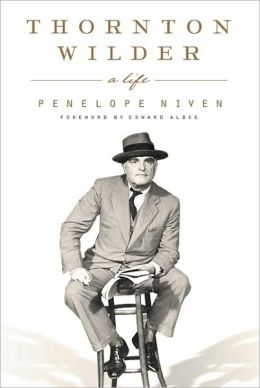
Thornton Wilder: A Life

by Penelope Niven    (Find this book)
Art is confession; art is the secret told. . . . But art is not only the desire to tell one's secret; it is the desire to tell it and hide it at the same time. And the secret is nothing more than the whole drama of the inner life. --Thornton Wilder
Thornton Wilder: A Life, the first biography of the playwright and novelist since 1983, is also the first to be based on thousands of pages of letters, journals, manuscripts, and other documentary evidence of Wilder's life, work, and times. For more than a decade, biographer Penelope Niven has worked with unprecedented access to Wilder's papers, including his family's private journals and records, searching for the secrets that illuminate Wilder's public life and work, as well as the hidden inner self sometimes concealed and sometimes revealed in his art and in his papers.
Thornton Wilder was a multifaceted man: a teacher, novelist, playwright, lecturer, actor, musician, soldier, man of letters, outspoken citizen, and international public figure. He was also an enigmatic, intensely private man. He belonged to a close-knit, complicated family--two brilliant parents, four gifted siblings, and the specter of his twin brother lost at birth. His biography is also a compelling family saga, starring Thornton Wilder, with strong supporting roles played by his father, mother, brother, and sisters.
He was a gypsy, wandering the world, writing, he said, for and about everybody--a fact international audiences still embrace. The Bridge of San Luis Rey, The Eighth Day, and his other novels are still read in the United States and abroad. His plays, especially the iconic Our Town and the revolutionary Skin of Our Teeth, are still performed on stages around the globe.
Yet despite the international fame and visibility of Wilder the writer, far too little has been known or understood about Wilder the man--until now. Comprehensively researched and richly detailed, Thornton Wilder: A Life brings the private man center stage and sheds new light on his published and unpublished work. -- Publisher Marketing